Over the last few years, organizations have made significant investments in AI governance. They’ve built AI inventories, established responsible AI policies, introduced AI assessments, and adopted monitoring and observability techniques. These capabilities have helped organizations understand where AI is being used, what risks may exist, and how AI systems behave.
But many enterprises are learning that visibility alone isn’t enough.
The Challenge With Today’s AI Governance Programs
An inventory can identify an AI system. An assessment can identify risk. Monitoring can reveal changes in behavior. But governance teams are increasingly finding themselves asking a different set of questions:
- Who owns this use case?
- What action is required when risk is identified?
- Does the use case align with existing policies and risk frameworks?
- How are exceptions managed?
- How can decisions be documented and demonstrated over time?
The challenge is no longer collecting governance information. The challenge is connecting governance decisions, accountability, and oversight into a repeatable process that can scale across the enterprise.
As AI adoption accelerates, organizations are realizing that discovering AI is only the beginning. The harder challenge is governing it continuously as systems, data, models, and agents evolve.
The Shift Toward Programmatic Governance
This is where the market is heading. Organizations have invested heavily in discovery, assessment, policy, and monitoring capabilities. The next phase of maturity is connecting those activities into a governance operating model.
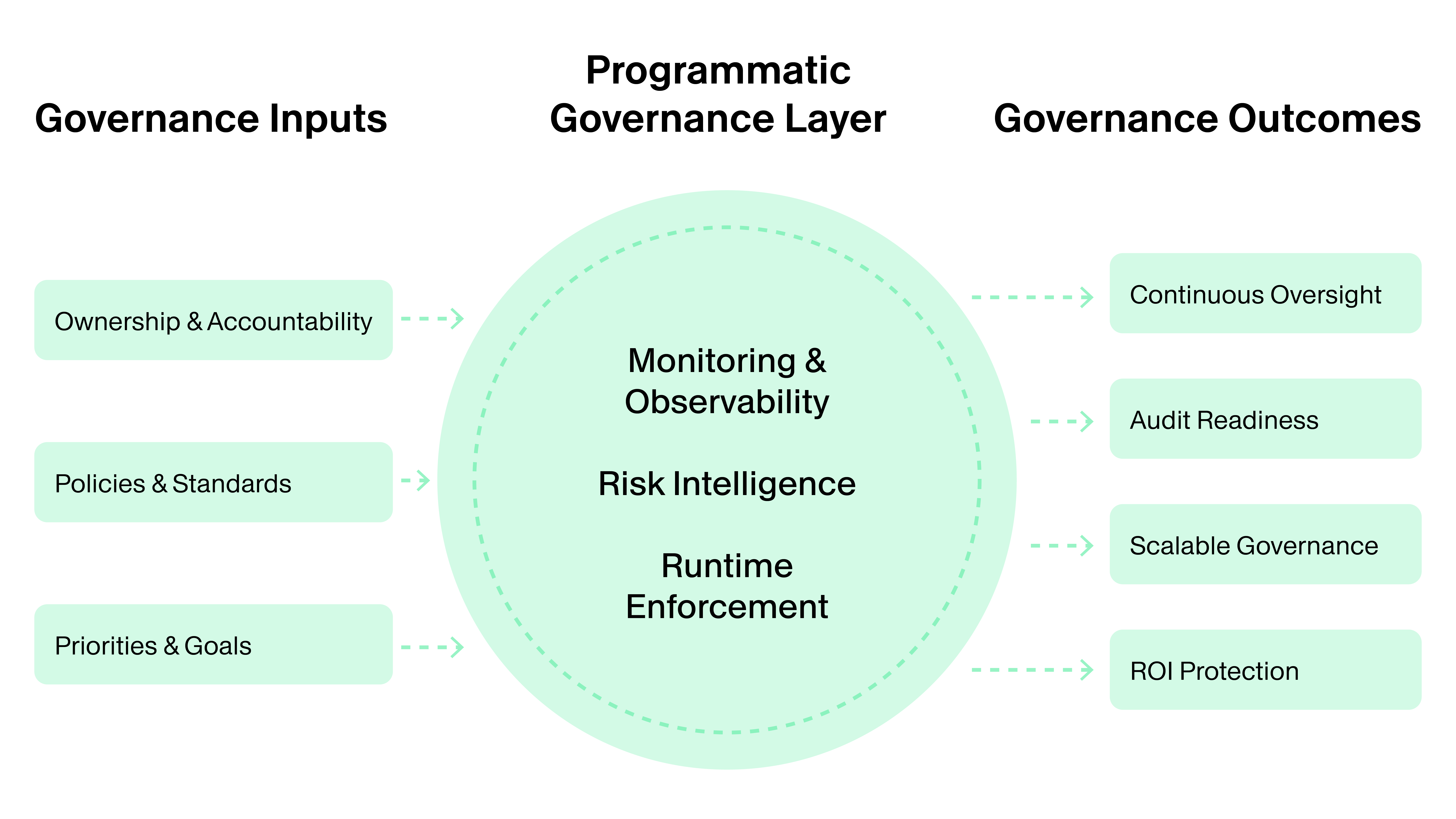
Programmatic governance is emerging as the missing link between governance activities and continuous oversight. It connects inventory, assessments, policy requirements, ownership, approvals, risk decisions, and evidence management into a single framework that remains consistent throughout the AI lifecycle.
Rather than treating governance as a collection of disconnected activities, organizations can establish a repeatable process that supports oversight from initial AI intake through deployment, monitoring, and ongoing review.
The goal is not simply to identify risk. The goal is to ensure risk can be managed consistently as AI systems evolve.
How OneTrust Helps Operationalize Governance
This is where OneTrust helps organizations move from governance inputs to governance outcomes.
At the programmatic governance layer, organizations can inventory AI systems and use cases, perform AI assessments, establish accountability, align controls to existing risk frameworks, manage governance workflows, and maintain evidence of governance decisions. These capabilities provide the operational foundation needed to scale AI governance across the enterprise.